agriculture development
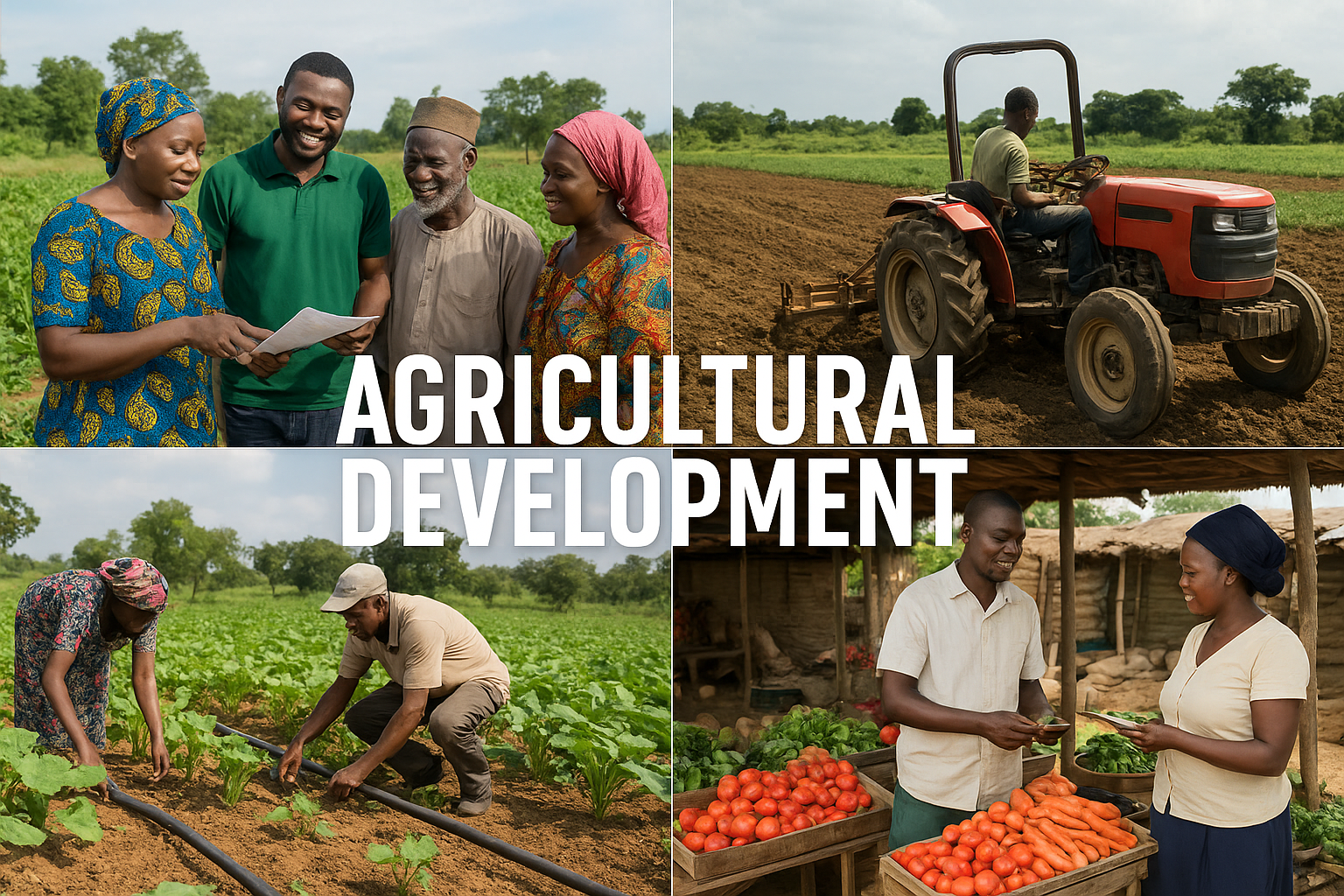
Agriculture remains the backbone of Nigeria’s rural economy, employing millions of people and providing food security for the nation. Yet, rural farmers have long faced challenges such as low productivity, lack of modern tools, poor access to markets, and vulnerability to climate change. To address these, the Rural Development Authority Board (RDAB) prioritizes Agricultural Development as one of its core programs, creating opportunities for farmers to thrive while strengthening Nigeria’s overall food system.
1. farmer support programs
RDAB provides extensive support to smallholder farmers through training, subsidized farm inputs (seeds, fertilizers, pesticides), and access to affordable credit facilities. Farmers are also organized into cooperatives to enhance bargaining power, encourage knowledge sharing, and improve access to markets. By empowering farmers with modern techniques, RDAB helps increase yields, reduce losses, and improve livelihoods.
2. irrigation systems
Given the dependence on rainfall, many rural farmers struggle with seasonal production. RDAB implements irrigation schemes, including small dams, borehole-powered drip irrigation, and water storage facilities to ensure year-round farming. These irrigation projects enable farmers to grow multiple crops annually, reduce food shortages, and build resilience against climate change.
3. mechanization of agriculture
Traditional farming methods often limit productivity. RDAB introduces modern agricultural machinery such as tractors, harvesters, and planters, making them available at subsidized rates or through cooperative ownership schemes. Mechanization not only increases efficiency but also reduces drudgery, encourages youth participation in farming, and boosts commercial-scale production.